
The complete guide
How to choose the right 12V pump for your van
Every 12V pump in a campervan does one of four jobs: moving fresh water to a tap, boosting weak pressure, emptying a waste tank, or clearing a wet bilge. Picking the wrong type, or the right type undersized, is the single biggest cause of disappointment — this guide covers what actually matters before you order.
Start with the job, not the brand
A fresh water pump and a booster pump both move water under pressure, but they solve different problems — a fresh water pump is the whole supply, while a booster sits inline to lift pressure that's already weak from a tank or mains hookup. A macerator solves a waste-tank problem a fresh water pump can't touch, and a bilge pump solves neither — it clears standing water automatically. Match the type to the actual job before comparing specs within it.
Flow rate (GPM) and pressure (PSI): what the numbers mean
GPM (gallons per minute) is how much water arrives; PSI (pounds per square inch) is how hard it arrives. A pump rated 3-4 GPM at 45-55 PSI comfortably serves a single tap or shower head. Bigger vans running a shower and a kitchen tap at once, or anyone who dislikes a pressure dip when a second outlet opens, should look toward 6 GPM and up. Higher numbers aren't automatically better — oversizing wastes tank water faster and draws more from your leisure battery than the job needs.
Chambers, accumulator tanks and adjustable switches
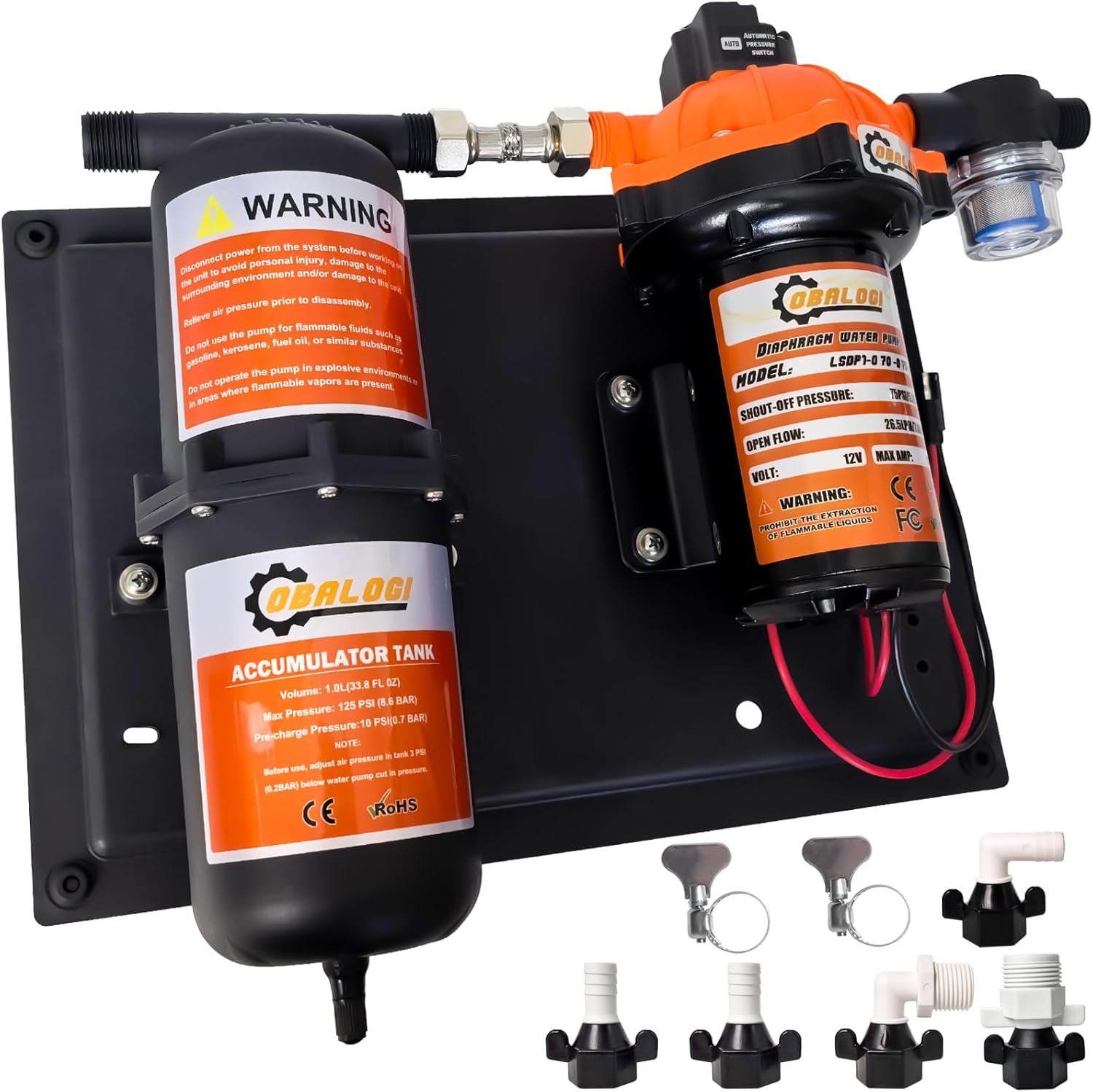
A basic single-chamber diaphragm pump pulses noticeably every time it cycles. A 4- or 5-chamber design spreads that work across more diaphragms, smoothing delivery. A built-in accumulator tank goes further, holding a small reserve of already-pressurised water so light draws don't trigger a full motor cycle at all — worth paying for if you value a quiet system. An adjustable pressure switch lets you tune the exact PSI to your specific plumbing run rather than accepting a fixed factory setting.
Wiring, fusing and mounting
Every pump here runs from a standard 12V leisure battery supply. Wire it through its own inline fuse, sized to the pump's rated current draw, and keep the cable run as short as practical to avoid voltage drop — a pump starved of voltage delivers less pressure than its spec sheet promises regardless of how good the pump itself is. Mount low and close to the tank, with the strainer or inlet accessible for cleaning, and use rubber isolation feet to cut down on transmitted noise and vibration.
Macerator and bilge pumps: the specialist cases
A macerator pump earns its place if you tour regularly and don't want to be tied to specific disposal points — it chops waste and pushes it through a narrower hose, clearing a full tank in minutes rather than the longer time a gravity valve takes. A bilge pump is a safety fitting more than a convenience one: wired to switch on automatically as water rises, it's there for the one time a slow leak or wash-down runoff needs clearing before it becomes a problem.